The humble beginnings and roots of the World’s Game and the start of arena soccer in Cleveland, Ohio.
By Delorean Fleetwood
Cleveland, OH: The history of sports in the city of Cleveland, Ohio, is a rather fascinating one. From the trials and tribulations of being a Browns and Indians (now Guardians) fan to the long road back home that led LeBron and the Cavs to their first NBA Title in 2016, Cleveland sports fans, safe to say have had to endure quite bit. It’s safe to say the city’s hockey history isn’t very well touched upon either, although the Monsters won the American Hockey League’s Calder Cup in 2016, giving the city of Cleveland a two banner year in sports. Their second ever and first since 1948. That year was the last to see Cleveland win the World Series (they defeated the Boston Redsox in a one game playoff to decide the American League Pennant after they both finished with the same record, the only time in the pre League Championship Series era that it happened in the AL. It happened four times in the NL. 1946 St. Louis Cardinals over the Brooklyn Dodgers 2 games to 0, 1951 NY Giants over the Brooklyn Dodgers 2 games to 1 thanks to the famous “shot heard round the world,” 1959 LA Dodgers over the Milwaukee Braves 2 games to 0, and 1962 SF Giants over the LA Dodgers 2 games to 1) the Browns also would win the AAFC Championship, as the Browns were the dominant driving force back in their days playing in the All American Football Conference. It could be argued that it shouldn’t count as the AAFC isn’t the NFL. Though the NFL just recently made AAFC records and statistics officially part of the League’s history and statistics. The same could be said for 2016 as the Monsters play in the AHL and not part of the “Big four sports” (five if you count MLS, six or seven for leagues like NLL box lacrosse or arena football and or arena soccer). Heartbreak in the “big one” is all too familiar for fans in this otherwise blue-collar city. From “The Drive” and “The Fumble” to the Arena Football League’s Gladiators getting blown out in their one bad game all season during the Arena Bowl at home in 2014, Cleveland’s history with mind boggling losses mystifies even the most religious individuals.
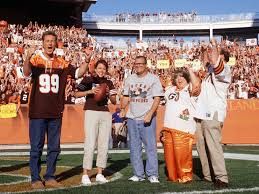
Regardless of opinions of what qualifies as a “banner year,” there’s no sugarcoating it. The city, often referred to as “The Mistake by the Lake,” is a suffering sports town and has been for more than half a century… any kid from the Pacific Northwest such as I was growing up watching The Drew Carey Show at ELEVEN YEARS OLD could see those Cleveland jokes a mile away. And yet, what if I told you lost amongst those alleged “dark days” was a sport and team that not only ignited the city and its passion, but gave them World Championship aspirations on a season to season basis?
Today, we will begin the first of a five part journey that gives us insight to arguably the City of Cleveland’s greatest sports heroes that bridged the days between 1948 and 2016. Though much closer to the latter. There will be some lost gems found in those days after their initial run to stardom that gets overlooked today. We will then finish the final parts by recapping not only their return but their eventual rise to restore as much of their former glory as possible. Finally, we will look to the future and what it holds for this group that’s given the City of Cleveland sports fans something to ROCK and ROLL about and call home once more….let us begin. Today is part 1.
In 1972, the old American Soccer League’s Cleveland Stars would begin play at George Finnie Field on the campus of Baldwin-Wallace College in nearby Berea, OH. In 1974, the franchise would change its name to the Cobras. The Cobras would often bring international friendlies against other teams holding these contests at old Cleveland Stadium. Among those were the national teams of Poland, Israel, and Canada. Teams that came to old Cleveland Stadium to play exhibitions included the Cork Hibernians F.C. and Sligo Rovers F.C. from Ireland, GKS Tychy and Arka Gydnia from Poland, Beitar Jerusalem F.C. and Hapoel Jerusalem F.C. from Israel, Eintracht Braunschweig and VfB Oldenburg from Germany, and finally Partizan Belgrade from Yugoslavia (now modern-day Serbia). While the team never made it past the first round of the playoffs (something they achieved only three times in the franchise’s 10 seasons in town, 73, 75, and 76), they averaged at best around 3500 a game at GF. Not bad numbers over a 10-year run in a city that massively overlooked this team for the likes of the Browns, Cavs, and Indians. Though it should be noted the team turned a profit during their run from 1972-1981. Even the former NHL team, the Cleveland Barons, got more press. While the Stars/Cobras may not have taken the city by storm, it certainly planted the seeds for the world’s game to ultimately thrive in Cleveland….albeit in a more untraditional sort of way.
In 1978, the Major Indoor Soccer League took the sporting world by storm in the United States with the launch of an exciting new brand of soccer that was (literally) off the wall fun that drew fans from all corners of town where they played the game. “Arena Soccer” as it came to be known (or indoor soccer by others) was a chance for the “world’s game” to be played during the cold winter months in smaller venues that housed hockey and basketball teams and gave ownership groups and arenas a chance to fill dates that might normally be dark and unable to turn a bigger profit.
Others overseas may have scoffed at what some called a “bastardized” version of soccer in America, but it soon became apparent that this sport gave others a chance to hone their skills much like an off-season training or workouts of sorts. Some outdoor stars that may have been overlooked because they lacked skills to make it in prime time in places like Europe or South America could come to the United States and be recognized and witness the very same passion and support they might have otherwise missed out on. What seemed like a funny concept back then has churned many a fan (including myself) of the sport of arena soccer. Heck, Diego Maradona played a match for Argentina against Brazil. While it may be known as Mini Football in the world’s eyes (it even has its own World Cup and federation known as WMF, World Mini Football), to us back home? We love the sport of arena soccer for all its faults and missile lauched kicks that the game has to offer.
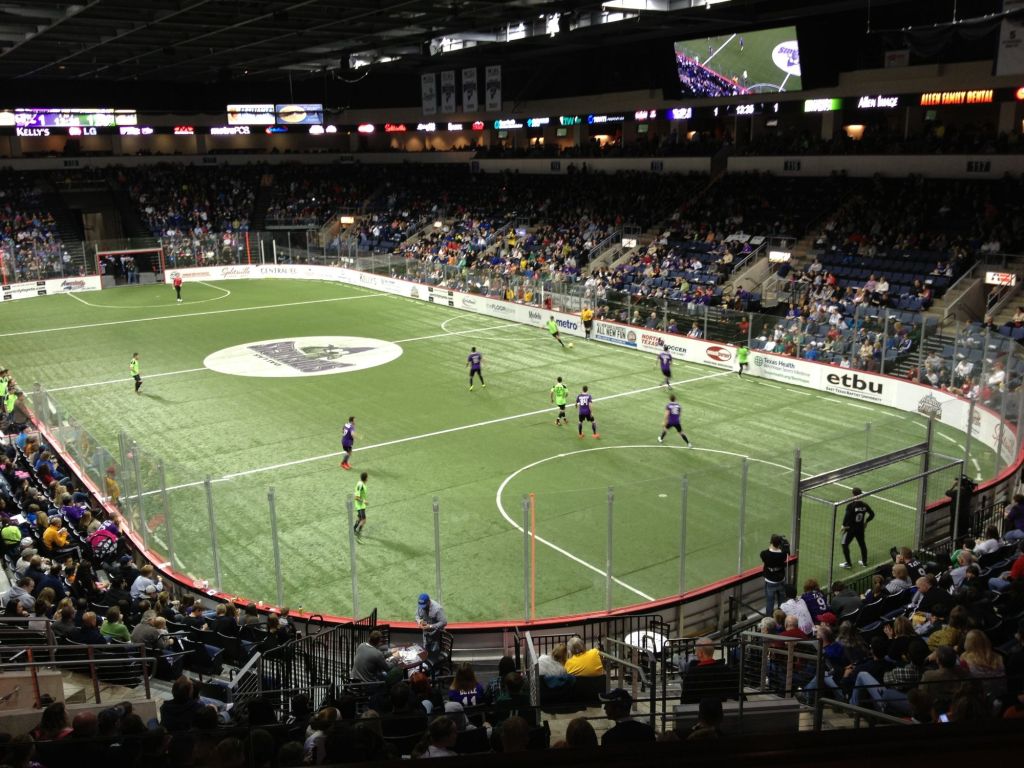
Now, you may be asking, “Wait, what is arena soccer anyways?” Well, it’s quite simple. The game (which is sometimes referred to as “five a side”) is played indoors inside of an arena, similar to say Rocket Arena or the TD Garden. The field surface is turf laid on the arena floor, while smaller goals are stationed at each end. Hockey boards and glass are installed to not only keep the ball in play but set up shots and passes as well. Six players are on each side (including the goalie). The goal is essentially the same as the outdoor game. Whoever scores more goals wins. Sounds pretty simple, right? Well, there are no offsides rules that need to be contended with, and there are power plays that can help swing the tide of a game in a teams favor (wait, hold up, this sounds A LOT like hockey, doesn’t it?) You’re right! The rules are certainly INSPIRED by hockey. In fact, foul accumulation and certain major fouls can result in a blue card leading to a power play advantage to the fouled team (wait, there’s BLUE CARDS??!!). Fun game, isn’t it? It’s not too hard to keep track. Power plays are two minutes, and like hockey, the power play ends if the team scores on the man advantage. Yellow and red cards function in the same way as they normally do in the outdoor game. And late game extra attacker situations are common strategies to see as well. Keeping track so far? It’s pretty simple. It’s just an indoor game of soccer with no offsides that has powerplays and man advantage like hockey. Neat little hybrid, isn’t it? I think so.
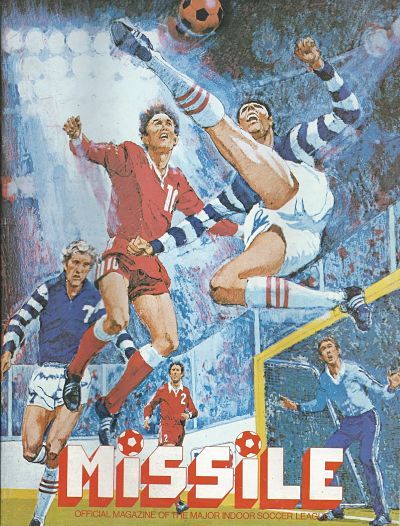
Now then, going back to our original topic, the Cleveland Force was one of the six original franchises in MISL history. Along with the Cincinnati Kids, Houston Summit, New York Arrows, Philadelphia Fever, and Pittsburgh Spirit. The Force were dead last in their inaugural campaign at 5-19 while averaging only 3116 fans a game at the now demolished Richfield Coliseum. Lost in all the Star Wars themed branding the team decided to take it upon itself for being named after was the sowing of a seed that would ultimately berth the City of Cleveland’s greatest modern day sports heroes, the Cleveland Crunch.
1979-80 saw attendance dip to 3080 nightly while the team finished tied for last in the Central Division with the St. Louis Steamers at 12-20. Only the Atlantic Division’s Hartford Hellions finished with a worse record out of the leagues now 10 teams at 6-26. Next season, the league expanded to 12 teams and gained a new division (Western) as a result. The Force were much improved, going 21-19 and a sparkling 14-6 at home. At 4884 a night, the Force were on the rise. In an era where the Cavs and Barons provided essentially nothing of value to see at the Richfield Coliseum, the Force offered something rarely seen by the fans who attended events here; This is a winning team. Despite losing in the first round, 2 games to 1 to the Baltimore Blast, both losses were by a single goal 6-5, while Cleveland drew 10,639 to the RC to witness a thrashing 7-1 win setting up the winner take all game three. The temporary setback wouldn’t dampen the spirit the Force had brought to the city or its new and ever growing fanbase. Nor would finishing 15-29 the next year missing the playoffs yet again the following season as 5001 came to watch the team nightly in 81-82. Next year was going to be different, they said, and next year, those fans’ faith got rewarded in a pretty big way.
In 82-83, the team went 29-19, good enough for 2nd place in the Eastern Division and the leagues third best record. Only Baltimore (30-18) and San Diego (32-16) were better. Attendance rose to 6609 a game. Even better? A deep playoff run made Cleveland a FORCE to be reckoned with come playoff time. Their first taste of playoff success came as they defeated the Chicago Sting 2 games to 1 drawing crowds of 8519 in their game 1 loss but came back to force game 3 and see 19,106 loyal Force supporters clinch their first series win 7-5 against Chicago. They would face off against the Baltimore Blast once more in the Semi-Finals and would even surprise the Blast winning game one on the road. Yet after a hard fought series, the Blast would redeem themselves in a winner take all game 5 at home, and defeat Cleveland 8-6. The Force drew 16,136 for game 3 (they lost) and 12,178 for game 4 (they won that to set up game 5). Despite the playoff heartbreak that the city was familiar with, the Richfield Coliseum had a winner. The city had a winner they could go and support. The future of arena soccer for the Force MISL was bright indeed.
1983-84 provided a true glimpse of those previously mentioned championship aspirations. Behind an average nightly crowd of 13,692, the Force finished third in the Eastern Division with a 31-17 record, trailing only Baltimore (34-14) and Pittsburgh (32-16). In fact, all three aforementioned teams were the only ones to reach 30 wins during the regular season (St. Louis was 26-22, tops in the Western Division and fourth in the MISL). Cleveland drew Pittsburgh in the first round. The Force would make it back to back trips to the Semi-Finals after bouncing the Spirit 3 games to 1. After taking game 1 in the Steel City, the Spirit notched a game 2 win, sending the series back to Cleveland. 10,383 grateful spectators at the Rich were rewarded with an OT winner by Alex Tarnoczi 11:46 into the extra frame setting up game 4 three nights later. In game 4, 18,630 saw the Force set up a rematch with the Blast defeating Pittsburgh 5-3. Unlike last year, Baltimore would not be denied at all as they swept Cleveland aside in a 3 game sweep, though game one and two were decided by one goal. 10,591 saw the Blast rip through the city, and it’s team 7-2 on their way to winning their first MISL championship. The disappoinment was a harsh reminder of how far the Force had to go before they could finally make it all the way and win it all.
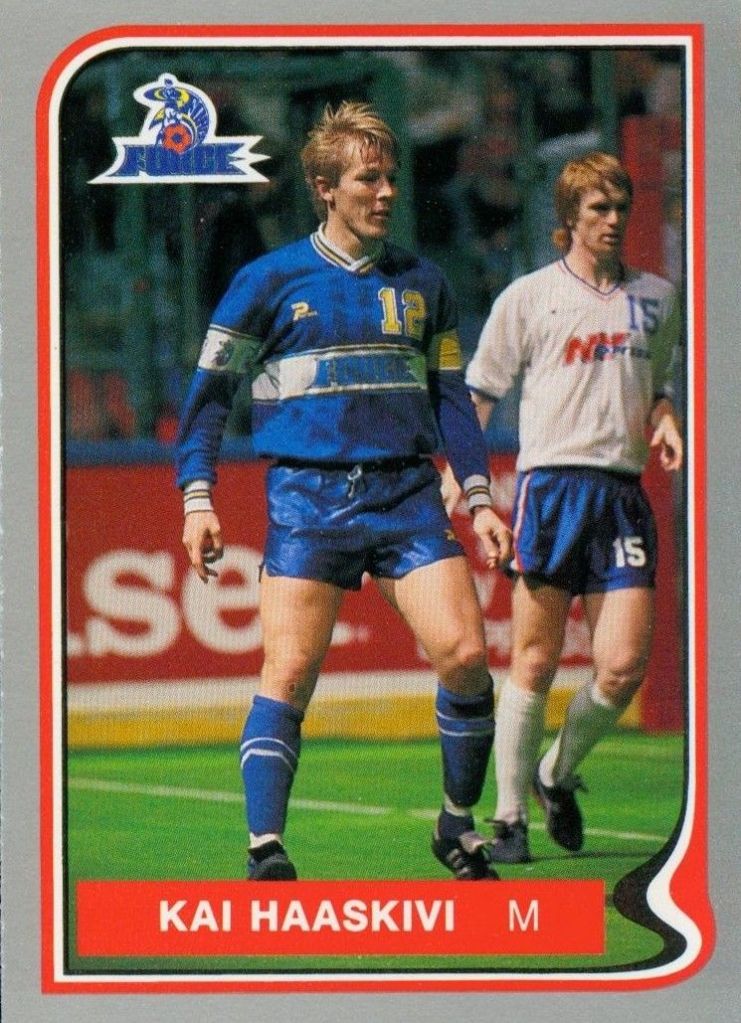
1984-85 saw the Force take a small step back attendance wise at 12,929 and finished 3rd in the Eastern once again, this time at 27-21. However, this did not prevent a third consecutive Semi-Finals berth as they defeated Chicago once again 3 games to 1, drawing 8112 in their game 3 victory and 11,248 in their series clinching win in game 4. Once again, Cleveland was tasked with having to defeat the Baltimore Blast. In a back and forth series that saw both teams splitting the first four games, the Blast would once again come out on top in game 5 winning that one 7-4, the only game in the series that was decided by more than two goals. Cleveland had their chances, though. Game three in front of 13,093 had them up 2-1 in the series after winning game two to tie it. Game 4, however, proved to be their undoing as the Blast tied the series sending it back to the Charm City 7-6 in front of 13,861 heartbroken and disappointed fans that became accustomed to these sorts of losses all too often. It is better to have loved and lost than not have loved at all, right?

1985-86 would provide another milestone for a franchise that had become accustomed to regular season and first round playoff success, a divisional crown, something they had not won prior to the season. Even at 27-21, the Force were still the best team out East and still continued to give the Force fans something to always cheer about. The lack of playoff success against Baltimore MAY have kept a few extra fans from the turnstiles as only 12,793 turned out for the games this season nightly. Another milestone would soon be on the docket for the postseason success starved franchise. They FINALLY defeated the Baltimore Blast in the playoffs! While only 8666 saw a 7-2 game one win, game two saw the Blast pick up an 8-3 win in front of 19,468, a record playoff crowd. Just when it looked like things were gonna go south AGAIN, Cleveland did something different this time around. They were down 2-1 after losing game 3 and needed to win in OT to force game 5 back home. Kai Haaskivi provided the answered prayer 3:21 into the extra frame to send the series back to Cleveland for game 5. There would be no Blast magic this time around as Cleveland soundly beat Baltimore 5-1 in front 16,626 graceful spectators. They had finally slayed their playoff dragons…..or had they? The upstart Minnesota Strikers were their Semi-Final opponents, and while Minnesota has their OWN share of sports playoff misery, something has to give in this particular series, doesn’t it? While 18,797 witnessed a game one win at home, Minnesota fought back and struck down the Force in game two in front of 16,877. Just as Haaskivi had provided the answer to Cleveland’s prayers, Thompson Usiyan would answer the call for Minnesota fans at home 2:08 into OT of game 3 setting up an opportunity to eliminate the Force. Two nights later, they did just that, winning 7-3 and sending the Strikers to the MISL Finals, disappointing Cleveland fans once again. Despite more milestones and progress being made, the end result was still the same old, same old.
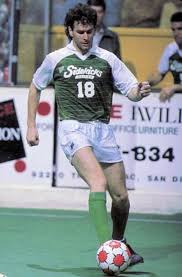
1986-87 saw the Force pick up right where they left off, winning the Eastern Division, giving them back to back division titles, another milestone for the club. They saw a record improvement going 34-18 and beating out the Blast for the crown by just a single game. Only the Tacoma Stars had an overall better record at 35-17. The largest average regular season crowd would turn up this year at 14,111 a game. These fans were something else that season, and anyone watching MISL soccer back then could tell you that. There was something different about this team. Would the Force come through this time? Well, for starters, they had a chance to slay yet another dragon in the Minnesota Strikers. Minnesota wasn’t going down without a fight in this one, in fact a future Cleveland hero for the Crunch would bury an OT winner 2:07 into game one’s extra session to give the Strikers the early series advantage in front of 11,461. Game two saw only 7165 in attendance as the Force gutted out a one goal win to tie the series up. Cleveland showed some grit three nights later, winning by a goal yet again and going up 2-1 in the series. Three nights later, it would be Minnesota’s turn to gut out a one goal win, sending the series back to Cleveland for game 5. The Force would give 11,808 fans another series clinching win as they downed the Strikers 7-3 and advanced to the Semi-Finals once more. Their opponents? The Dallas Sidekicks. Cleveland jumped on Dallas in game one in front of 12,034 fans. But in a shocking turn of events, the Sidekicks would take the next four games and the series, taking game 2 9-6 in front of 13,051 awestruck spectators and 4-3 in the series clinching win in front of 8859 dumbfounded fans who couldn’t fathom how a team that only went 28-24 in the regular season could knock them aside so easily. Tacoma Stars fans found that out the hard way, though allowing the same guy (Mark Karpun) to score OT winners up 3-2 in the series only to lose game 6 and 7 (game 7 had 21,728 at the Tacoma Dome, an indoor soccer record crowd to this day, I believe) would be incredibly hard to swallow to say the least. Another year, another disappointing and preplexing result to a team that most say they should have beaten.
1987-88 would ultimately become the last season for the beloved Force franchise. 11,279 a game packed this last season for the soon to be defunct Force. Could Cleveland finally win the big one in their swan song? They got edged out by just a game to Minnesota for the division crown. They still finished 30-26, good for fourth in the entire league, only the San Diego Sockers (42-14), Los Angeles Lazers (31-25), and Minnesota (also 31-25) had a better record.
The Force once again slayed another previous playoff demon in the Dallas Sidekicks, winning 3 games to 1, including a double overtime thriller in game 3 down in Dallas. Minnesota would be their Semi-Final opponents once more. This time, however? The Force took another step forward by making their first (and only) trip to the MISL Finals. Despite getting shut out at home in game 2 (a rarity in the sport as only very few documented shutouts exist in arena soccer spanning over 50 years of different leagues), the Force won the series 4 games to 1 to set up a date with the San Diego Sockers for their chance at a title in their last season. Cleveland losing in OT in game 1 may have been an indication that the 42 game winners in the regular season were not going to win so easily. Those aspirations would be quickly deflated as the Sockers were every bit as good as their 42-14 record showed during the regular season (the Kansas City Comets took them to 7 games before bravely falling in the Semi-Finals). The Sockers put Cleveland out of their misery with wins of 6-1, 3-2, and 7-4 to take the 1988 MISL Championship in a 4 game sweep. Making this more remarkable is that “The Lord of All Indoors” Steve Zungul was NOT a member of the Sockers that year, but the Tacoma Stars. Owner Bert Wolstein, who was fed up with other MISL owners not investing in the league and teams the way he was, pulled the plug in summer of 1988 just a month removed from their first championship series appearence. With teams folding left and right and the Force’s attendence declining, Wolstein decided it was time to end the Force after ten long, successful, but heartbreaking years that left lasting memories and seeds that would soon produce future success for the sport of arena soccer in the city of Cleveland Ohio.
This ultimately marked the end to an incredible run of arena soccer in the City of Cleveland. Despite not finishing the job, the city had shown it will happily get behind and support a winner in the face of difficult times and heartbreak just as they did with the Dawg Pound Defense of the 1980’s Browns when HOF LB Clay Matthews Jr. and QB Bernie Kosar led them to 2 AFC Championship games. Both losses.
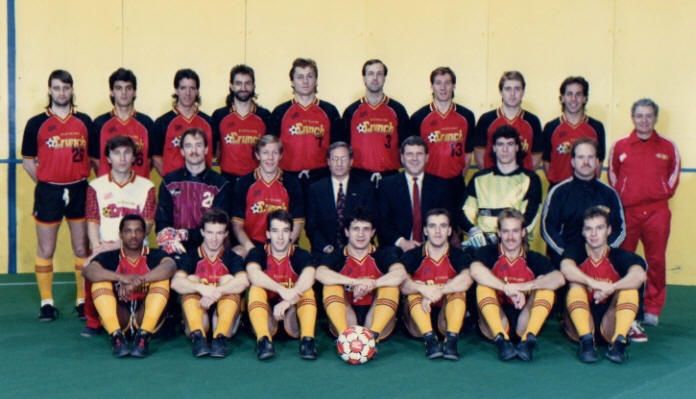
However, on July 22nd 1988, shortly after the Force folded up shop, Akron businessmen George S. Hoffman and Stuart Lichter would form an ownership group that ultimately brought arena soccer back to the Richfield Coliseum and the MISL beginning with the 1989-1990 season. With Al Miller leading the way as their GM, player/coach Kai Haaskivi manning the sidelines, many former Force players from the mid and late 1980’s were brought back into the fold, the newly minted Cleveland Crunch would soon kickoff an era that would be unmatched in the modern era of Cleveland sports in the modern day and maybe only rivaled by the AAFC Browns dynasty. Would this era provide the long suffering Cleveland Sports fans the championship aspirations that they dreamed of? Or would it be more of the same year after year heartbreak? Tune in for part 2 tomorrow!


 Starball Sports and Entertainment
Leave a reply to CRUNCH TIME (PART 2) – Starball Sports and Entertainment Cancel reply